
Our Purpose
Mental health awareness is everywhere. Yet so many men still struggle to connect with the idea of therapy.
We want to change this. “It’s OK to Talk, Man” is simple on purpose.
We are a space for men, where therapy can feel normal.
Still therapy. Just delivered on a level that actually connects.
Michael Ralls, MBACP, Dip. Couns. Therapist
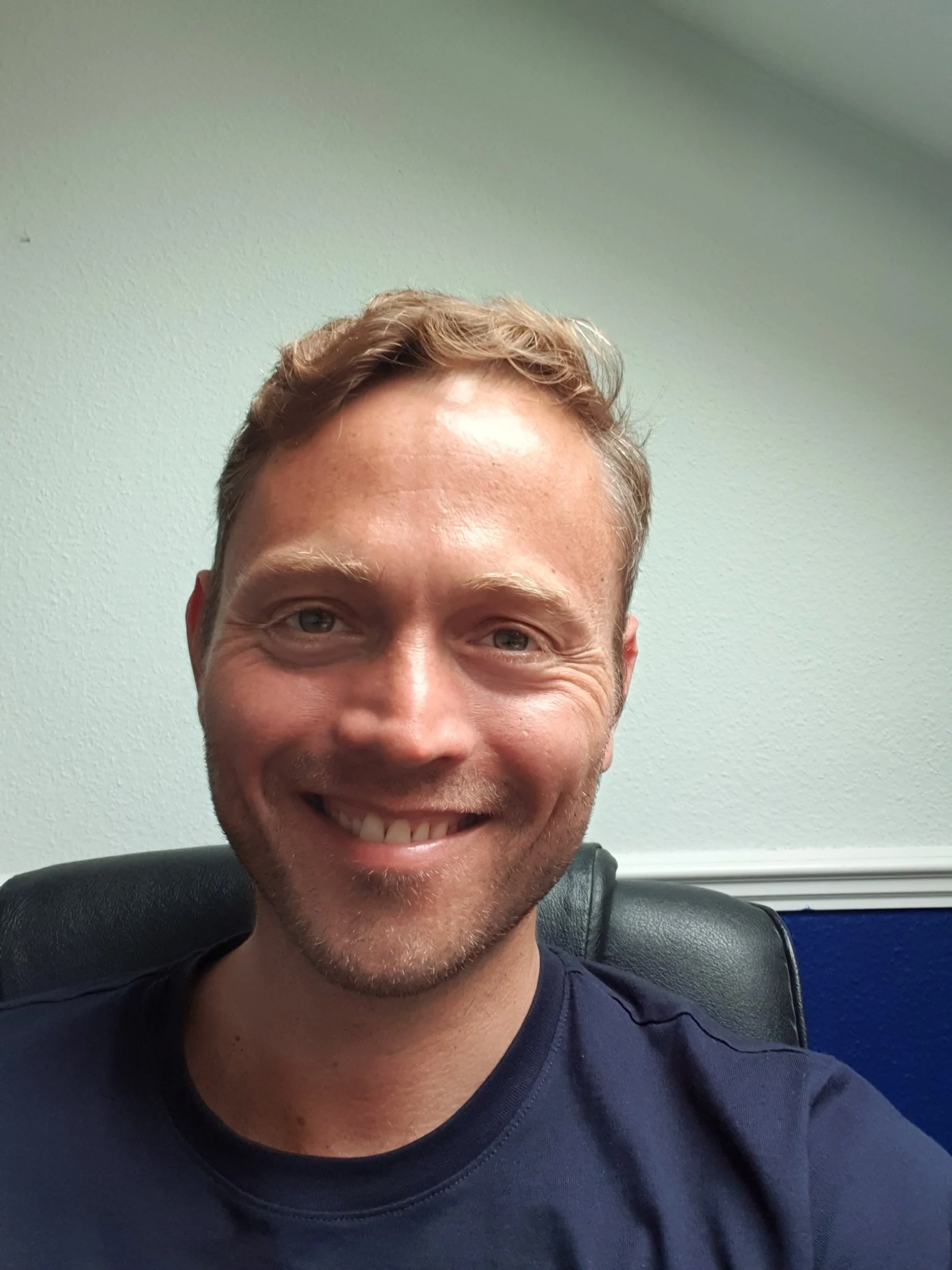
Why I do this work
I never set out to become a counsellor.
For over 15 years I worked in corporate sales and marketing. Fast-paced, high pressure, always moving forward. I was OK at it but I never felt like I excelled. Maybe the right motivation wasn’t really there. On the outside, life looked fine. On the inside, it didn’t always feel that way.
As the years went by, the lifestyle I’d built became hard to sustain. Anxiety and low mood crept in. Destructive coping mechanisms surfaced and snowballed, and relationships suffered. I felt stuck, exhausted, caught on a treadmill and unsure where exactly I was heading. Like many men, I kept going for longer than I probably should have. I was good a hiding the turmoil I felt inside. Even from myself.
Eventually, I sought therapy.
Over time I began to understand myself better. My patterns, my coping strategies, my history, the decisions that had led me to where I was, and the expectations I’d been carrying, often without realising it.
It became clear why I’d ended up in a career in sales and corporate environments. It gave me structure and identity. And it ‘looked good’ on paper. Being naturally warm, empathic and a world-class people pleaser, I found building relationships easy. I focused on the needs and expectations of others. All too often to the neglect of my own.
Therapy gave me space to slow down, set boundaries, and make different choices. Not perfect ones, just more honest ones. I learnt my mistakes were not failures, but opportunities to learn, if I was willing enough to look at them.
Wearing a mask day-in-day-out was exhausting. But somewhere along the therapy journey I realised I had cast it aside.
I was being my authentic self. At work. At home. With family. In the pub. On dates. In life.
I finally understood what it really meant when people would say to me “just be your self”. It felt liberating. I began to perform better at my job. I even began to enjoy it. Something I hadn’t experienced for many years.
The experience of therapy and the journey it set me on was transformational. It gave me hope where it had once felt lost. And in the process I came to realise just how many men are out there, trying so hard, yet struggling quietly. Convincing themselves they should be coping better than they are.
I retrained as a counsellor to do work that felt had purpose and meaning. To help others find that seed of hope. I know first hand how powerful it can be to have a space where you don’t have to perform, impress, or hold it all together.
I continue my own personal therapy to this day, believing strongly in practising what I offer.
Maté Jarai, MBACP, Dip. Couns. Therapist
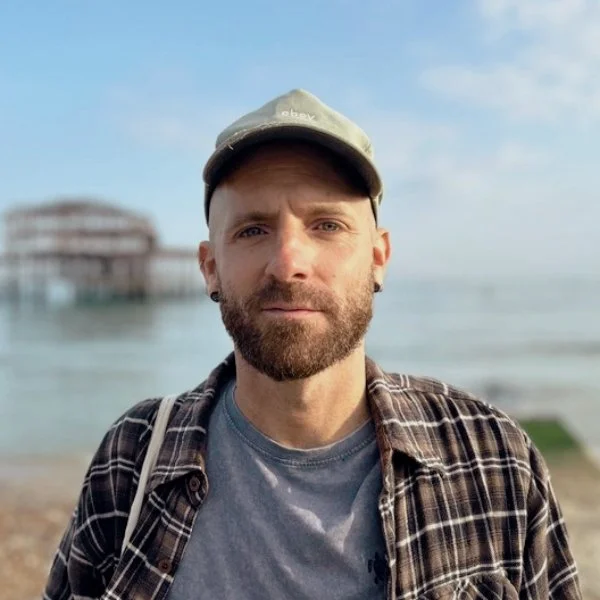
Why I do this work
I was born in Budapest in 1988 and spent much of my childhood moving between countries because of my parents' work. Looking back, those experiences gave me an incredible opportunity to see different cultures and ways of life, but they also left me with a lingering sense of not quite knowing where I belonged. Questions around identity, belonging, and what it means to feel at home stayed with me long after childhood, and without realising it, those questions shaped much of my life.
As a teenager, I found myself drawn to the creative arts. Music became poetry, poetry became writing, and eventually I completed a PhD in Creative Writing at the University of Southampton. I was fascinated by stories—not just how they're told, but what they reveal about who we are. I found myself returning again and again to questions about identity, relationships, meaning, and what it means to be human.
Alongside my studies, I worked with children in education and later taught abroad in Italy. I loved working with people and seeing how creativity could help them express parts of themselves that words alone sometimes couldn't reach. And while from the outside my life may have looked full and varied, underneath I was struggling.
I had become disconnected from myself following a series of personal issues and failed relationships. I moved back to the UK and took a job as a health content editor in a very corporate environment. It was horrible. There was no humanity in that work, and I felt like I had completely lost myself. I had become a part of what I saw as a huge problem with the world we live in, and hated myself for it. The uncertainty that had followed me for years, combined with a new sense of isolation and helplessness took its toll on my mental health. I felt out of control and I blamed the world around me.
That was when I decided to go to therapy, and it became one of the most important decisions I've ever made.
At first therapy just helped me cope, and as time went on, it gave me the space I needed to slow down and explore parts of myself I'd never really paid attention to. I began to understand how my early experiences had shaped the way I saw myself and others, how I related to people, and why I found it so hard to fit in with the world around me.
Through therapy, I learned to stop blaming the world for my problems, because that was a cop out. It was my defence mechanism, but one that was holding me back. I learned to take accountability, and to understand where that anger and resentment was coming from. For the first time, I felt able to meet myself with curiosity rather than judgement.
As my understanding grew, so did my self-compassion. I found myself becoming more authentic, more grounded, and more accepting of who I was. I learned to forgive myself. The questions about identity and belonging that had followed me for so long didn't disappear overnight, but they no longer felt like something I had to solve. Instead, they became part of my story.
That experience transformed not only how I felt about myself but also how I wanted to spend my life. I wanted to help others find what I had found, so I retrained as a counsellor.
Through my counselling work, I try to offer the same kind of space that had such a profound impact on me—one where you don't need to pretend, perform, or have everything figured out. A space where you can slow down, explore what's happening beneath the surface, and feel genuinely heard without judgement. Holding onto things will weigh you down in ways you may not even realise. It’s always better to talk it out.
We bring our lived experience and professional training into our counselling work, supporting others - particularly men - who may be feeling stuck, overwhelmed, or disconnected from themselves or those around them.
Training and professional standards
We are registered counsellors with the British Association for Counselling Practitioners (BACP) with a Level 4 Diploma in Humanistic Therapeutic Counselling.
Change starts with one conversation
We’ll have a 20-minute online chat to cover any questions you have, see how it feels. Only then need you decide if you want to continue. The cost? 20 minutes of your time.